Airline shareholder loses case against three co-directors

The High Court dismissed the case brought by Adan Yusuf, a 25 per cent shareholder who accused his co-directors of financial impropriety and sidelining him in the management of the company.
According to court documents, the three directors grew the airline from purchasing one aircraft on credit until the carrier gained financial stability to add more than 20 planes to its fleet.
“The application is without merit and is hereby dismissed in its entirety with costs to the defendants,” said High Court Judge Alfred Mabeya.
READ MORE
Mr Yusuf had accused Hussein Mohamed, Mohammed Abdikadir and Hussein Farah of siphoning $1 billion (Sh108 billion) from the airline to overseas bank accounts.
However, Justice Mabeya found the accusations baseless, with the Directorate of Criminal Investigation not finding any wrongdoing against the three directors.
The court heard that Yusuf had only injected Sh150,000 into the company and did not increase his contribution into the Wilson Airport-based airline.
He also did not actively participate in the affairs of the company for 23 years. If he had been excluded, the judge said, he never took action on it. The court concluded that he did so willingly.
Yusuf was in the business of exporting miraa when he joined the airline.
The court ordered that he settle all the damages, both financial and in reputational loss, incurred over the five years since he filed the case.
“The suit together with six others filed by the director in various courts since 2016 have the potential to cut the carrier’s creditworthiness, its goodwill among members of the public, demotivate its employees as well as damage its reputation and success,” said the judge.

Absorption of Grade A and B office space rose 64 per cent in the country in the first half of 2021, a new report shows. The Knight Frank Kenya Market Update for the last six months attributes the increase to a global roll-out of the Covid-19 vaccine that inspired confidence among employees.
This is as the rents for the prime offices fell marginally in the period under review from $1.12 (Sh121) to $1.10 (Sh119) per square foot per month.
“This dramatic increase was mainly attributed to the roll-out of vaccinations globally, providing occupiers with confidence to resume looking at their occupational strategies, evidenced further by the gradual physically return of employees to their offices,” noted the firm.
“We have seen a reduced supply of new office developments resulting in occupiers taking up space in existing commercial buildings and landlords becoming more flexible by reducing their rental terms. Similar to 2020, the average occupancy rates across commercial buildings over the review period were at 73 per cent.”
READ MORE
The report showed that prime residential rents fell at a slower rate of 6.02 per cent over the last 12 months to June 2021, compared to a 7.62 per cent decline in a similar period in 2020.
Prime residential sale prices in Nairobi marginally improved by 0.1 per cent over the past 12 months to June 2021, compared to a 5.1 per cent decline in a similar period in 2020 - providing signs the market is stabilising.
“There has been a notable increase in market activity in the first half of 2021, and we expect prime residential sale prices and rental rates to improve in the second half of 2021 due to the increased flexibility from landlords and sellers, projected positive economic growth and containment of the virus,” said Knight Frank Kenya Managing Director Ben Woodhams.
According to the report, the retail sector continued to be heavily affected by the pandemic and harsh economic environment. Prime retail rents decreased from $4.2 (Sh456) to $4(Sh434) per square foot per month over the review period.
“The marginal decline was mainly attributed to the economic slowdown, reversal of various tax reprieves in January 2021 resulting in less disposable incomes and re-introduction of containment measures in March 2021.”
Occupancy levels for retail centres averaged 70 per cent to 80 per cent, although more established malls recorded higher occupancy levels of up to 90 per cent, said the report. “The retail market continues to be a tenants’ market although the second half of 2021 projects a positive outlook for this sector, mainly due to the economic recovery, rollout of vaccinations, the reopening of the economy and the easing of containment measures,” said Knight Frank Retail Portfolio Manager Ashmi Shah.
“Positively, one sector of the market in which we are witnessing significant interest is smaller convenience centres.”
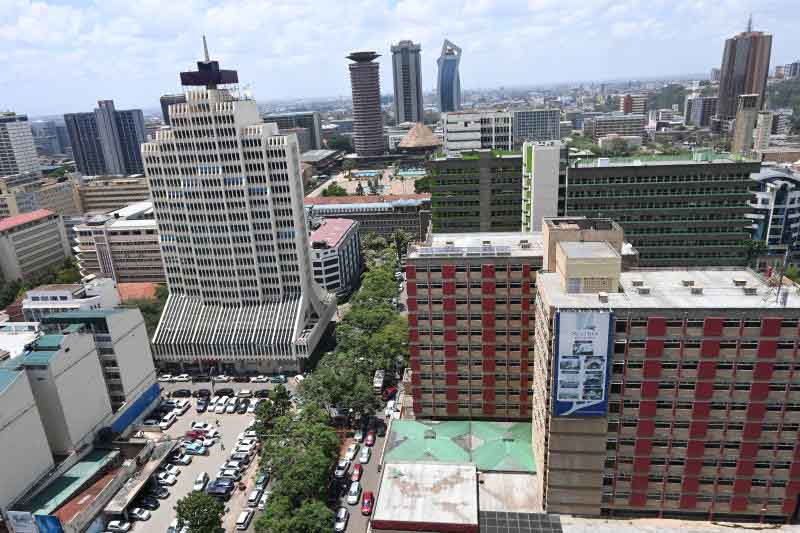
Most people love the good city life. And the nearness to facilities and social amenities, and the higher rate of appreciation for real estate or property. With this, the good feeling of being a city dweller is sensible. And owning land or living in urban areas is everyone’s dream.
But have you ever thought of the experience of owning land outside urban areas? Of living in the quietude of the village, probably not very far from the urban but far enough to earn the moniker “countryside”?
Kennedy Murimi, the director of Denver Group Ltd, a real estate company, reckons that devolution was a game-changer for rural Kenya, noting that more people have been lured to the countryside.
“Many government functions have been devolved and this has led to expansion and infrastructure growth in towns away from the city,” Murimi says.
“We have seen the expansion of roads, establishment of hospitals, and many county governments’ functions that have led to increased jobs. You do not need to come to Nairobi for key issues as they have been brought closer to the people.”
Such factors, says Murimi, have increased demand for land outside the city and led to many people preferring to live in satellite towns.
“Investors willing to cash in on real estate should consider satellite towns. The majority of people are looking to settle and invest in these areas. Demand for land will continue increasing since devolved functions are being established. In a few years, land away from the city will attract very high prices,” he says.
Land surveyors concur. “Of course the process of marking out fixed boundaries is more rigorous and painfully long as compared to general boundary surveying in the countryside,” says Bernard Wanjohi, a Nyeri-based land surveyor.
“Processes such as subdivisions are much easier in the rural areas. The rural areas afford farmers’ large tracts of land which they can cultivate at a little cost and reap high agricultural value,” Wanjohi says.
Analysts say most land in rural areas is freehold land where owners don’t pay land rates or worry about a lease renewal, even as those in urban areas pay.
Loice Noo, a sociologist, explains that culture plays a main role in investment decisions in regard to land ownership. This favours investment in land in rural areas. A belief that people should build houses in their rural homes suffuses. Such people must acquire land in their ancestral homes.
“A house is a symbol of status. It is also a symbol of authority and security to some,” she says. “If one does not put a house in their ancestral home, they are regarded as people without status and authority.”
Alex Muema, the Managing Director of Ndatani Properties, argues that while a rural home is not put up for economic purposes, it can still make financial sense.
Thus, owning a house outside the city while having to work within also shows economic ingenuity.
“If you are near a town like Nairobi or Machakos, it is better to operate from your home to work. That makes economic sense rather than rent a house in town when you are able to build your own home and commute every day,” he says. “Some of my friends live in Kitui which is 150km away and work in Nairobi.”
Living in the city has been known to treat people to endless traffic congestion, rising insecurity and disruption in the provision of amenities. This has been the norm with increasing population and often, incompetent administration. Some of the city’s top estates do not even have sewer lines, depending on exhauster trucks to cart away human waste.
Nairobi was recently ranked by Mercer as the 145th most expensive city in the world, dropping from position 95 and indicating cheaper living conditions for expats. However, the city was also ranked as the 20th most stressful city in the world by German company Vaay.
The Vaay report can hardly be disputed. Many people fancy life outside the confines of the city. According to Murimi, affordability attracts people in buying land outside the city.
However, even as people want to be away from busy urban areas, they ought to consider location and access to the city. “Location determines a lot about the land and real estate. Land close to the city will fetch higher value over time compared to one that is far from the metropolis. Currently due to devolution, the price for land within the outskirts of the city has started going up and its demand has increased,” says Murimi.
“Land is affordable within these areas outside the city and the majority of individuals can afford to buy. The importance of buying land away from the city considering the price is that growth will be fast due to developments and key sectors being set up by the State and private sectors.”
The serenity outside the city lures many people into land buying in satellite towns. If facilities that are available in the city can also be found in these areas, then the bigger reason is to buy land and settle here.
For Murimi, most individuals consider other things as well before settling to buy land. “First, they will check accessibility to their workplaces, security, availability of amenities, and transport,” says
“Well, land in the outskirts of Nairobi, for example, has good road networks serving the city, and the environment is conducive for people to live. Land away from Nairobi is seeing a rise in demand since the development of key social amenities due to the devolved functions of government have improved and land is cheap for many people to buy.”
Private investors, he says, are building schools and hospitals to cater for this demand with supermarkets, financial institutions, and companies relocating their offices away from the congested city.
“In most towns away from Nairobi like Kiambu and Machakos, there is a good environment for people to settle away from the hustles and pollution of the city.”
Wanjohi, however, says those who own land in the urban areas are at a higher risk of being disrupted as the government acquires more land for development.
This might be economically disruptive even though some people make more money from such acquisitions.
As many people look for a way to live away from the hustle and bustle of the city, the attractiveness of countryside ranches will only grow, with every small rural township transforming into the next big town.

Buying your first home can be an exciting step. Though it signifies the start of financial freedom, it can also be nerve-wracking. However, housing prices, despite falling during Covid-19, are still 4.4 times higher than in 2000.
The average price of a one or two-bedroom residential property, according to HassConsult, is Sh14.4 million, while a four to six-bedroom residential property goes for Sh39.1 million.
Property investors can, however, take advantage of the mortgages at affordable housing finance schemes.
Mary Ndirangu has been a mortgage and property advisor for five years with a leading commercial bank.
She shares tips and tricks that can help you navigate your first home search and mortgage application.
READ MORE
What entails a mortgage?
Think of a mortgage as a loan on the property you seek to buy, where a lender offers you cash upfront.
The borrower then pays for the property using it as collateral. The difference with other loans is that a mortgage is long-term and can go up to 25 years.
Be aware of mortgage perceptions, but don’t knock it.
You are likely to come across some of the negative perceptions around mortgage products because the process is more complex than a regular loan.
The turnaround time is much longer than other facilities such as personal loans, and people find it tedious. Depending on the property you want, the vendor may push you to make payments while your mortgage is still being processed and end up losing to another buyer.
Secondly, the cost of getting a mortgage is higher than other loans because of costs.
Regardless, taking a mortgage has its upsides. No one wants to pay rent forever. If you calculate how much you spend on rent yearly, you may find you could be able to buy a house in five years with the same amount
You are not too young
Everyone should take that initiative as early as possible to buy a house. As long as you have an income, you should consider taking out a mortgage if you don’t have ready cash.
Ideally, you do not want to struggle to pay for a mortgage when you’re older. You need not worry about what may happen during an emergency as we saw during the pandemic, whereby you cannot repay the loan.
You have the option to approach the bank and explain your situation. For instance, if your business has been affected by the pandemic, the bank will give you a moratorium (grace period) or agree on a lower amount you can pay until things get better. However, this is on a case-to-case basis.
Do extensive research
Choose everything from a real estate agent and the property you’re interested in carefully.
It is no surprise that most fraud cases have to deal with land and property. When finding the house you want to buy, use reputable agents from referrals by other recent home buyers.
Go further to interview at least a few agents and request references. Extend that with due diligence to the property you pick. Say you want to buy an off-plan property where the structure has not been built but is cheaper and one is promised that the project will be done at a certain time.
Do not just take the vendors’ word for it and start paying deposits immediately. Find out if it is genuine property.
Do enough research around the property you want as well, in terms of affordability. Think about your long-term needs if you may want to expand your family.
Consider if you want to live in apartments that are cheaper but offer less privacy. Then compare the price with the same property in the market.
Don’t forget to save for closing costs
Sometimes you go in for a mortgage without being aware of the additional costs that are not covered. These are the closing costs, paid out-of-pocket and are typically three to four per cent of the purchase price.
Your lender should give you a specific number upfront so you know exactly what to bring on closing day. These include processing fees, insurance for both the property you are buying and for yourself as the borrower, payments for valuation, as well as legal fees for the lawyer doing the transfers.
On the bank’s side, stamp duty is the highest charge in a mortgage.
Tackle saving for your closing costs and down payment as intensely as you would when building an emergency fund.
Shop around for a low rate
Don’t just accept the first offer on the table. A seemingly small difference in mortgage rates can save you millions of shillings throughout a 25-year mortgage period. The rates of different banking institutions are close or similar as all banks are regulated by the Central Bank.
However, there is a slight difference with the lowest rate being 12.2 per cent and the highest at 15.1 per cent. Additionally, find out if the organisation you work for has a pact with banks as the rates on offer will certainly be cheaper.
As for negotiating for lower rates, it may be difficult for first-time buyers but an advantage to customers such as platinum clients or those who have been banking with an institution for a long time who stand to get better rates.
Your credit score matters
When you’re applying for a mortgage facility, the bank will visit your Credit Reference Bureau (CRB) report.
They will look up at your borrowing history in all banking institutions, the loans you have paid up and the ones you have defaulted on before, and if you have facilities with other banks.
If the income you have cannot service the facilities already taken up, then the mortgage process will not proceed. The CRB is updated continuously.
If you pay up your defaulted loans, you will be removed from the CRB blacklist.
After the initial default status has been regularised, you can proceed with the mortgage process.
Get your documentation in order
When you identify the property, the vendor should give you an offer for sale detailing the amount per unit, payment details, the deposit amount and how many days you need to clear the balance.
You will then get an offer letter, and a copy of the lease. At the bank, you will need to fill out a loan application.
All other documentation you need is your National Identity card and your Kenya Revenue Authority (KRA) pin.
If you are employed, they will need your payslip for the last three months and your bank statements over the last six months.
They may also require a letter from your employer stating the terms of your employment and your job title.
In terms of closing costs, the bank should prepare an excel document for you to go through, which you should acknowledge and sign to show that you have understood everything you need to cater for during the process.
Determine how much you can borrow
Your income is the key determinant of the amount the bank will give you. If you are working, you will need to provide your payslip. If in business, then offer your audited books of accounts.
The bank will then advise you based on your monthly income on how much you can be given - factoring in the ‘one-third rule’ of living expenses.
The rule says that no more than one-third of your gross monthly income should go toward debt payments, including housing.
Once your income has been established, a mortgage calculator is used to compute your monthly repayments.
Avoid mortgage broker
A few years back, banks were receptive to agents. The agents would link borrowers up with a bank to access the mortgage facility. That brought about fraud as people were using fake payslips and other documentation.
Since then, banks no longer accept facilities from brokers or agents. It is advisable to go directly to a mortgage department at a bank to get the advice you need directly.
Expect a few hassles before closing
Be on your toes in the mortgage process. Track the process because sometimes it can be slow, especially when it goes to lawyers.
Follow up, to know what is going on, when you are required to sign documents or make payments.
It may take months to finish one part of the process. For example, if you do not have legal fees you may have to wait until you get them for the rest of the process to continue.
Finally, do not pay the deposit before your loan is approved. Tell the vendor you are working on your financing.
Go to the bank and apply for your mortgage. Once it is approved and given an offer letter, feel free to pay for the down payment.
Do not start the buying process because sometimes, you may not be reimbursed the full amount in case your loan is rejected.
Firms in Kenya have threatened to move to court to challenge the introduction of a Uganda-based elec