Global airlines book Sh13trn loss as Covid grounds planes
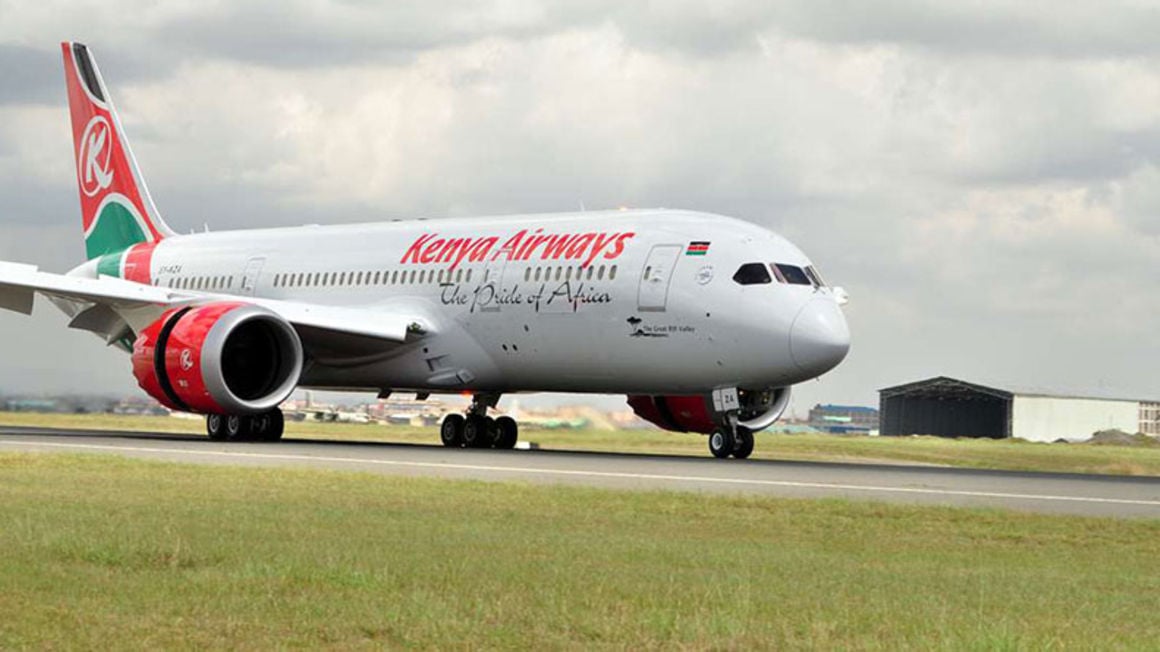
The airline industry recorded a total loss of $126 billion dollars in 2020 as the sector grappled with the effects of the Covid-19, which saw passenger aircraft grounded worldwide, posting the worst year on record.
The International Air Transport Association (IATA) said in the recently released World Air Transport Statistics (WATS) that the losses were occasioned by a sharp decline on number of passengers, which was down by 60.2 percent from the previous year.
The statistics show that passengers who travelled by air in the review period were 1.8 billion from 4.5 billion in corresponding period in 2019.
“At the depth of the crisis in April 2020, 66 percent of the world’s commercial air transport fleet was grounded as governments closed borders or imposed strict quarantines. A million jobs disappeared. And industry losses for the year totaled $126 billion,” said Willie Walsh, IATA’s Director General.
Africa suffered a 68 percent loss of passengers while the Middle East region suffered the largest proportion of loss in passenger traffic with a drop of 71.5 percent in Revenue Passenger kilometres (RPKs) versus 2019, followed by Europe at 69.7 percent.
The agency says air connectivity declined by more than half in 2020 with the number of routes connecting airports falling dramatically at the outset of the crisis and was down more than 60 percent year-on-year in April 2020.
Kenya opened its airspace for international airlines on August last year, having been grounded in April, while the domestic ones had resumed a month earlier.
The aviation sector is not yet out of the woods as the airlines continue to stare at a blink future with another round of the Covid-19 variant that has seen carriers suspend flights or reduce frequencies to some of their destinations.
Health experts have warned that the Delta variant that was first discovered in India — is on track to become the most dominant version of the coronavirus worldwide with the World Health Organisation announcing that it has been detected in at least 92 countries.
Just last month, Kenya Airways announced it has cut its frequencies to Uganda because of high number of Covid-19 cases , leading to a total lockdown by the authorities.
In June, Emirates Airline suspended passenger flights from Uganda to Dubai until further notice, responding to a UAE government directive which stopped Ugandans travelling to the region. Rwanda Air too suspended flights to and from Entebbe International Airport.
The variant will hamper summer bookings, which forms the bulk of airlines earnings in a given year due to high demand for travel.
Sharp decline on summer bookings saw Kenya Airways loss nearly triple to Sh36.2 billion in the year ending December 2020 as the carrier sank deeper into the red following a slump in passenger numbers occasioned by Covid-19.
IATA, however, said cargo remains a vibrant business for airlines in 2021 as the strong economy and restocking is driving an increase in share of world trade, with 13.1 percent growth in volumes, which is higher than the World Trade Organisation forecast growth for global trade aof eight percent.
Executives at the Kenya Airways, RwandAir and Uganda Airlines all have stated that the business environment is challenging, having t seen a rise in costs, cutbacks in capacity and a revision of business projections to adjust to the new market realities.
Kenyans without proof of National Hospital Insurance Fund (NHIF) membership will be locked out of government services under proposed rules that seek compulsory enrolment of every adult in the State-run medical scheme.
The NHIF says membership to the fund will be ranked equally with other State documents such as Kenya Revenue Authority (KRA) Personal Identification Numbers (PINs) when in search of government services.
This means that non-NHIF members will be barred from making critical transactions such as registration of land titles, approval of development plans, transfer and licensing of motor vehicles, and registration of business names and companies.
If accepted, those without active NHIF membership would also be cut from services such as underwriting of insurance policies, customs clearing, and forwarding, payment of deposits for power connections, supplying goods and services to the State, as well as opening accounts with financial institutions.
The government-backed National Hospital Insurance Fund (Amendment) Bill seeks to make it compulsory for every Kenyan above 18 years to contribute and be a member of the NHIF. They will be required to pay Sh500 monthly in a remodelled universal health coverage (UHC) scheme for outpatient and inpatient services, including maternity, dialysis, cancer treatment and surgery.
“We are looking at tying the active membership of NHIF to other services just like KRA PIN is for those going for things such as opening a business or seeking government tenders. This is one of the areas we are looking at once the law passes to encourage enforcement of the same,” NHIF chief executive officer Peter Kamunyo said.
“Let’s say you want to renew your driving licence or open an exhibition stall, you need certain licences from the government. To get these licences, part of the condition will be (to have) an active NHIF []membership].”
Dr Kamunyo said the changes would be introduced as subsidiary legislation to the NHIF Act, which is set to be amended. The proposed changes are currently before Parliament.
The planned mandatory NHIF membership will be an upgrade of the scheme where only workers in the formal sector are compelled to join.
The review of the law will target more than 16 million adult Kenyans who are not covered by the NHIF.
Official data shows more than 25.36 million Kenyans are above 18 years and the NHIF has 8.898 million members.
The compulsory enrolment has the potential to make the NHIF the richest State-backed firm given that the proposed law will also require employers to match workers’ monthly contributions to the fund.
Doubling the Sh1,700 that top contributors make to the NHIF ranks high on the list of targeted changes to the NHIF Act.
The NHIF Act makes it voluntary for informal workers to join and contribute Sh500 monthly. Only those in formal jobs are compelled to contribute between Sh150 and Sh1,700, depending on the salary scale.
The requirement for proof of NHIF membership ahead of seeking State services is aimed at driving compliance for every adult to have insurance.
The Bill seeks to review the current Act where contributions are optional in a bid to sign up at least 16 million more Kenyans in a race to achieve health care coverage for everybody. It proposes that monthly contributions to the NHIF be reviewed every five years.
The NHIF last reviewed its rates in April 2015 and is seeking to increase its income to boost cover for diseases like cancer and offer health insurance to all Kenyans.
The push to make NHIF card rank equally as other state documents such as KRA PIN comes on the back of the fund revealing that 5.7 million Kenyans had defaulted on payments, including those that had been helped to foot hospital bills by the scheme.
President Uhuru Kenyatta is keen to deliver universal healthcare as his legacy project before leaving office next year and has already endorsed the Bill publicly, asking Parliament to pass it.
The number of voluntary contributors has jumped in recent years on the back of a mass recruitment drive. The drive was aimed at pushing Kenya towards universal health coverage and relieve citizens of the burden of out-of-pocket expenses.
The number of voluntary contributors rose from 1.99 million in 2015 to 4.54 million in June 2020 while that from the formal sector hit 4.45 million from 3.22 million.
The increase is also the product of increased inpatient and outpatient benefits enabling members to access dialysis, chemotherapy, radiotherapy, and theatre services.
However, 3.2 million members from the informal sector and 1.5 million from the formal sector have stopped remitting monthly premiums from the fund.
The NHIF says many Kenyans especially from the private sector register, pay for a few months, and drop of once they have received costly services such as surgery. The scenario — called adverse selection in insurance terms— is putting at risk the ability of the insurer to settle claims and meet administrative costs.
The NHIF collected Sh59.5 billion from the 8.998 million members in the year ended June 2020 and paid out Sh54.9 billion or 92.2 percent as claims to hospitals. Adverse selection refers to situations where an insurance company extends coverage to an applicant whose actual risk is substantially higher than the risk known by the insurance company.
“If we continue having adverse selection, the fund will not be sustainable since all the payouts we make are from the premium we receive,” said Dr Kamunyo.
- Imported vehicles continue to pile up, causing congestion in Mombasa depots due to number plates shortage.
- The units which are now adding up to more than 1,000 have caused huge losses to car importers who are being forced to pay storage charges as the Kenya Revenue Authority maintains only duly registered cars with number plates will be released.
Second hand cars being offloaded from a Cargo Ship at the Port of Mombasa. FILE PHOTO | NMG
Imported vehicles continue to pile up, causing congestion in Mombasa depots due to number plates shortage.
The units which are now adding up to more than 1,000 have caused huge losses to car importers who are being forced to pay storage charges as the Kenya Revenue Authority maintains only duly registered cars with number plates will be released from port facilities.
Most vehicles imported since early July have not been released due to failure by the National Transport and Safety Authority (NTSA) to supply number plates for imported vehicles.
With at least three ships scheduled to dock at the Port of Mombasa in the next few days, the situation might worsen if the problem is not resolved with traders accusing NTSA of being reluctant in resolving the matter.
The Kenya International Freight Warehousing Association chairperson Roy Mwanthi said they are incurring huge losses despite paying all port charges.
“There is congestion in different car depots in Mombasa despite clearing with KRA but the vehicles cannot be released without number plates. This has resulted in increasing cost to importers as they are incurring demurrages every day,” said Mr Mwanthi.
“A number of importers are stranded and with more vehicles being imported at the moment, this will result in huge loss to dealers and individual importers.”
Car Importers Association of Kenya (CIAK) Chairman Peter Otieno said apart from inadequate plates, there has been a system failure as the KRA platform is not reflected.
“Most of the vehicles imported since July which tally close to 7,000 have not been released. The problem started about a month ago and with more vehicles being imported this time. We are having a serious issue. We are also having issues where a car is cleared by NTSA but at the KRA system, it is not reflecting it,” said Mr Otieno.
He noted that apart from plates, the importers are having challenges in getting stickers and they have to wait for about a week to get one.
In a letter seen by Shipping and Logistics from NTSA Director General George Njao dated August 6, 2021 to KRA Commissioner General Githii Mburu, the agency acknowledged the shortage which it has attributed to its supplier.
“NTSA is currently experiencing delays in production and supply of number plates and logbooks from our suppliers, the State Department of Correctional Services (SDCS) and the Government Printer respectively. As at the date of this letter, the authority is allocating number plates series KDD-P against the last series supplied KDD-L thus translating to a deficit of 3,000 number plates pending supply,” read part of the letter by Mr Njao.
“In addition to congestion at the Port of Mombasa, this delay has led to an outcry from motor vehicle dealers which have not only been inconvenienced but have to pay demurrage charges on a matter which is beyond their control. Both the SDCS and Government Printer have apprised us on the challenges they are experiencing in production which they have projected will be resolved in the next couple of days.”
NTSA now has asked KRA to release all registered vehicles to reduce congestion and cost to importers.
“As you are aware, the authority introduced a Third Plate Sticker (e-sticker) to among other things, enhance identification of registered motor vehicles. As a stop gap measure we kindly request you to authorise the release of vehicles which have been duly registered and the e-sticker affixed on their windshield, pending issuance of the physical number plates and the logbooks. In the meantime, we are working closely with our suppliers to address the challenges,” said NTSA director general.