UK retains Kenya travel ban as Covid cases surge

Travellers from Kenya remained banned to the United Kingdom in the latest update that took effect yesterday, coming days after President Uhuru Kenyatta’s visit to Britain.
The UK last week updated countries on England’s “Red List” amid concerns about the spread of new Covid-19 variants that have now been reported in Kenya.
Stakeholders in the tourism industry had hoped that President Kenyatta’s recent the UK and the meeting with his British counterpart Boris Johnson would help in lifting the ban on Kenya.
Several media outlets in the UK had projected that Nairobi would join countries like Qatar, Bahrain, United Arab Emirates and India that have been moved to the Amber List.
The UK retained Kenya, whose cases of Covid-19 have been surging for the last two weeks, on the travel ban first placed in April.
The UK has segmented countries into green, amber and red lists, each carrying different degrees of restrictions for arrivals back to the UK.
A British citizen travelling from a Green and Amber List is not required to undergo a mandatory quarantine.
Travellers arriving in the UK from countries on the Red List will be denied entry while returning Britons must submit to 10 days of mandatory quarantine in hotels.
Cases of Covid-19 in Kenya have jumped to above 208,000 with more than 4,000 cases.
The positivity rate climbed sharply by a double-digit in the last week, raising concerns among health officials.
In Kenya, 670,000 people have been fully vaccinated, representing a paltry 1.3 percent but the country has received several vaccine donations including from the UK and has also procured some with a target of inoculating 10 million Kenyans by next Christmas.
The UK travel ban comes amid fears that the highly contagious Covid-19 Delta variant may spark the fourth wave of infections in Kenya over the next two months.
Kenya has relaxed punitive requirements imposed on British citizens, which required them to undergo 14 days of isolation before entering the country.
In the mid-June review, the Kenya Civil Aviation Authority said the British nationals and non-citizens travelling through London are required to self-isolate for only seven days.
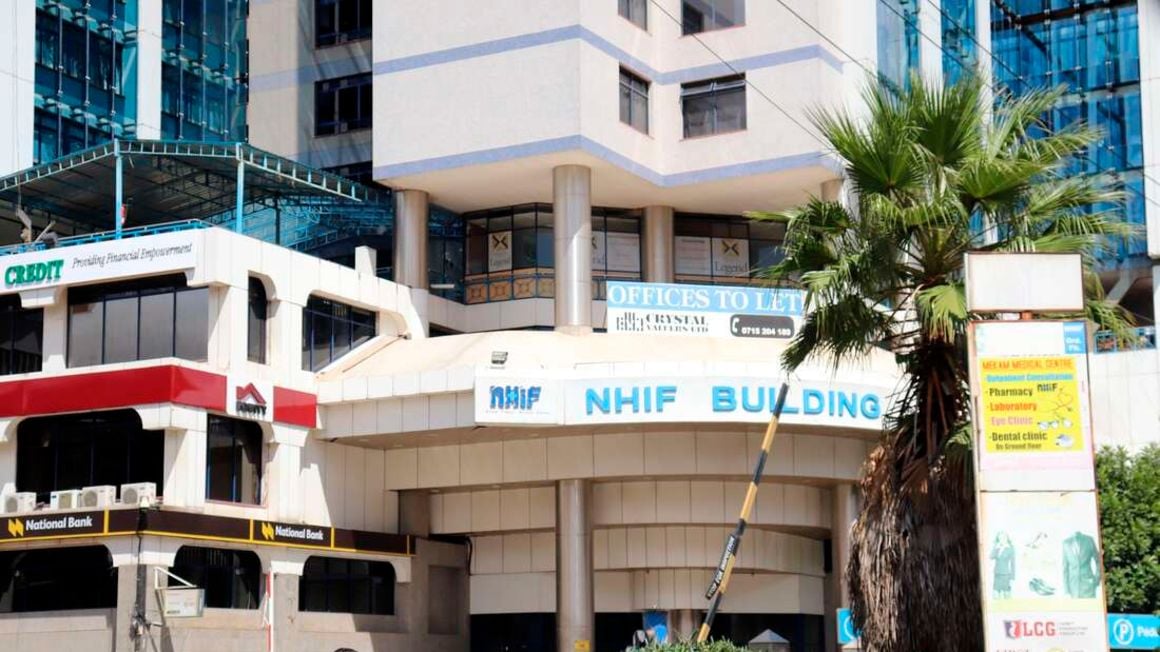
A number of law changes target the National Hospital Insurance Fund (NHIF) in what is expected make the State insurer better in terms of covering more people and more complex diseases at a time out-of-pocket medical bills are a big worry.
Among others, there are plans to make NHIF contributions compulsory, have employers match payments by their workers, and to have the premiums reviewed automatically after every five years.
One of the reasons for these reviews is ensuring the insurer’s income improves to give it more headroom in covering more complex diseases such as cancer.
In the last review, workers are now paying up to Sh1,700 monthly based on take-home.
All this confirms the NHIF is a key insurer that policy-makers are working round the clock to see it delivering the goal of having a healthy population that engages in nation building.
However, while focus is on improving collections, we ask MPs to ensure NHIF services are enhanced and made available across the country.
It does not make sense sending contributors to top hospitals whose charges possibly deplete the cover on a single visit. The reforms will only add value if contributors access top services with ease at affordable rates from their locations.

The Ministry of ICT is seeking to relocate fibre optic cables from the Sh33 billion Kenol-Marua road to facilitate its construction.
In recently published tender documents, the State has invited bids for design, supply, installation, commissioning and maintenance of the fibre optic cable along the 84km road.
Construction of the dual carriageway passing through Nairobi started in October last year and is scheduled conclude in October 2023.
“The government requires that all the utilities along the Kenol-Marua Road be relocation of by September 30, to facilitate completion of the road. State Department of ICT and Innovation will undertake relocation of the fibre infrastructure to minimise downtime,” says the ICT Ministry.
One of the key ICT infrastructure running along the road is the National Optic Fibre Backbone Infrastructure (Nofbi) project that started in 2005, as the State moved to connect all major towns with high-speed broadband internet.
Currently, Nofbi fibre optic ring passes through 58 towns in 35 counties across Kenya.
Relocation of the optic cable will be in two lots: Kenol-Kambiti-Sagana (50km) and Sagana-Karatina-Marua (38km).
The new design will integrate into Nofbi and connect to all government sites and institutions along the road as well as to the existing licensed internet service providers and telcos.
“The bidder shall develop a high-level and low-level network designs that will be approved by the employer,” says the ICT Ministry.
The Kenol–Sagana–Marua road project is part of the Trans-African Highway—the main transport route serving East and Central African countries from Nairobi to Moyale.
This is the second road on which the government is relocating crucial fibre optic cable to avoid internet outages during construction. The first relocation was on the 234km Nairobi-Mau Summit road.
Relocation of the optic cable on the Nairobi-Mau Summit road will be in four lots: Rironi-Naivasha via Mai Mahiu, Rironi-Naivasha, Naivasha-Nakuru and Nakuru-Mau Summit.
Construction of the Nairobi-Mau Summit road project begins in September and seeks to expand the road into a four-lane dual carriageway through a Public-Private Partnership model.